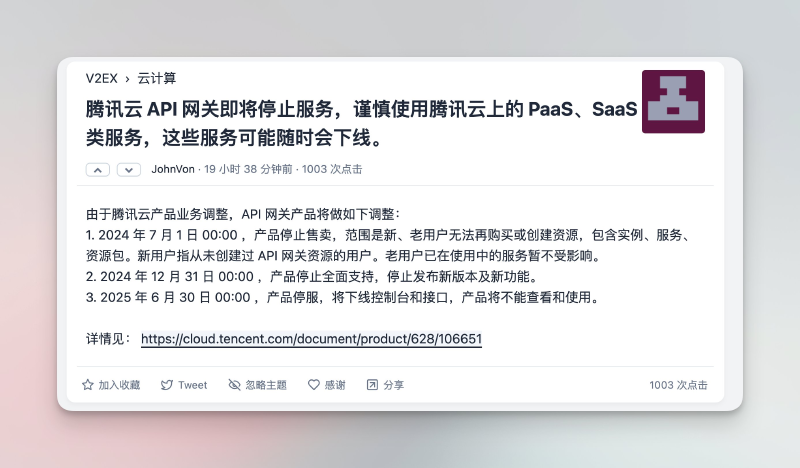
Background: API Gateway Is Going Away

Heard Tencent Cloud’s API Gateway is being sunset. Some of our projects were (unfortunately) built on it. What to replace it with now?
Important: API Gateway product end-of-sale announcement
Back when I was still using Tencent Cloud’s managed k8s masters for free, after one upgrade they switched our Services to API Gateway behind the scenes and started billing by usage.
So I began looking into how to remove and replace it — and today that work finally pays off.
Option 1: Tencent Cloud k8s + NodePort
- Keep the same cluster; join your own machines as worker nodes.
- Remove all Services bound to internal IPs; expose everything via NodePort.
- Install NGINX on worker nodes and reverse-proxy traffic to NodePort.
This ran for about a year. Then the managed cluster itself started charging a “management fee”. A few dozen RMB per month, hundreds per year — not acceptable for us. Time to migrate again.
Option 2: SuperEdge self-hosted cluster + NodePort + NGINX
For a self-hosted cluster, use whatever is convenient.
I wrote these back then:
I was basically an organic promoter for the project.
However… last year the old SuperEdge WeChat group was migrated; the new group seemed unmaintained. People I knew said the project moved into maintenance mode.
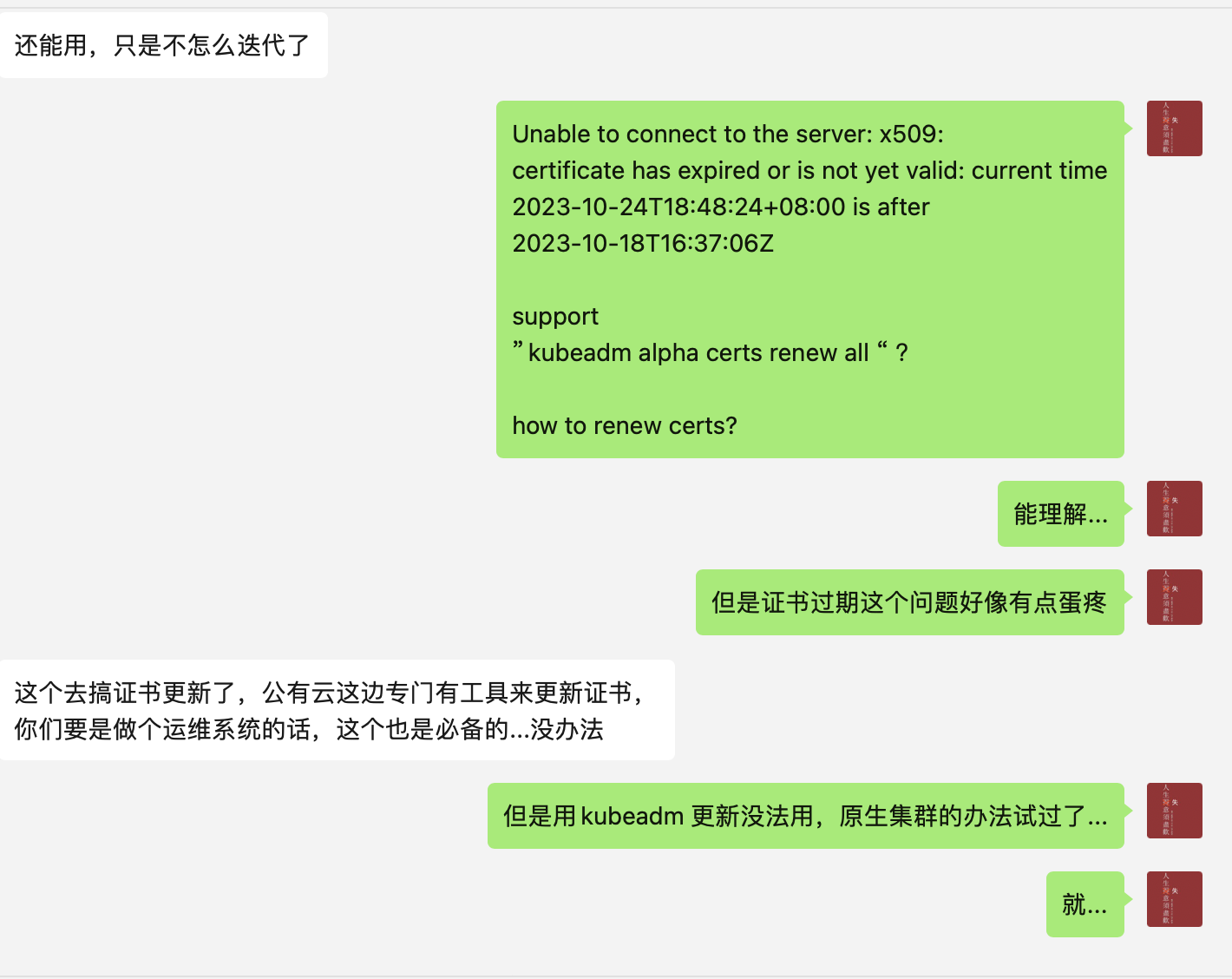
The real problem: the certs expired and wouldn’t renew; my cluster broke.
Honestly, it’s tiring — many big-company open-source projects in CN end up tied to KPIs. Hard to get in, harder to keep running, and easy to get dropped.
So I started looking again, with these goals:
- Still all‑in on k8s
- Still self‑hosted
- Still zero cost
Then I found k3s — it’s great.
Final Approach: k3s + ingress-nginx
Deployment guide: https://zhuanlan.zhihu.com/p/696737105 (Chinese)
Example node list:
1
2
3
4
5
6
7
| NAME STATUS ROLES AGE VERSION
aliyun-bj-199 Ready <none> 34d v1.29.4+k3s1
haru Ready <none> 6d16h v1.29.4+k3s1
t7610 Ready <none> 6d2h v1.29.4+k3s1
vm-16-12-ubuntu Ready control-plane,etcd,master 75d v1.28.7+k3s1
vm-28-17-ubuntu Ready,SchedulingDisabled control-plane,etcd,master 75d v1.28.7+k3s1
zj-hc1 Ready <none> 33d v1.29.4+k3s1
|
As you can see, there are two masters (vm-16-12-ubuntu and vm-28-17-ubuntu). They’re on cloud VMs, mutually reachable on the private network, and both have public IPs (important).
Other nodes are a mix of local, other clouds, and edge devices. They can talk over private network, but not all have public IPs.
Previously, we needed an API Gateway to forward traffic to worker nodes. That’s what Tencent Cloud’s API Gateway did, but we don’t have it anymore. Instead, we can use ingress-nginx.
In a k3s cluster, any node with a public IP can serve as an entry point.
We can configure ingress-nginx to forward traffic to services living on worker nodes.
All you need is to pass --node-external-ip when starting the server/agent to set the public IP.
 1
 2
 3
 4
 5
 6
 7
 8
 9
10
11
12
13
14
15
16
17
18
19
20
| # server
ExecStart=/usr/local/bin/k3s \
server \
--node-external-ip PUBLIC_IP \
--flannel-backend wireguard-native \
'--tls-san' \
'PUBLIC_IP' \
'--node-name' \
'vm-16-12-ubuntu' \
'--server' \
'https://10.0.28.17:6443' \
# agent
ExecStart=/usr/local/bin/k3s \
agent --node-name zj-hc1 \
--lb-server-port 5443 \
--node-ip 10.42.4.1 \
-node-external-ip PUBLIC_IP \
--server https://server:6443 \
--token="YOUR_TOKEN" \
|
Now ports 80/443 on that node can accept external traffic (make sure your firewall allows it). Point your domain’s DNS A record(s) to that node’s public IP, and you’re good to go.
A Minimal Working Example
- Self-signed or ACME certs supported
- Any node with a public IP can act as an entry point
- For LB, add multiple A records or use DNS load balancing
  1
  2
  3
  4
  5
  6
  7
  8
  9
 10
 11
 12
 13
 14
 15
 16
 17
 18
 19
 20
 21
 22
 23
 24
 25
 26
 27
 28
 29
 30
 31
 32
 33
 34
 35
 36
 37
 38
 39
 40
 41
 42
 43
 44
 45
 46
 47
 48
 49
 50
 51
 52
 53
 54
 55
 56
 57
 58
 59
 60
 61
 62
 63
 64
 65
 66
 67
 68
 69
 70
 71
 72
 73
 74
 75
 76
 77
 78
 79
 80
 81
 82
 83
 84
 85
 86
 87
 88
 89
 90
 91
 92
 93
 94
 95
 96
 97
 98
 99
100
101
102
103
104
105
106
107
108
109
110
111
112
113
114
115
116
117
118
119
120
121
122
123
124
125
126
127
128
129
130
131
132
133
134
135
136
137
138
139
| apiVersion: v1
kind: PersistentVolume
metadata:
name: stirling-pdf
spec:
capacity:
storage: 30Gi
accessModes:
- ReadWriteOnce
persistentVolumeReclaimPolicy: Delete
storageClassName: local-storage
local:
path: /mnt/cfs-a4nopkhh/stirling-pdf
nodeAffinity:
required:
nodeSelectorTerms:
- matchExpressions:
- key: kubernetes.io/hostname
operator: In
values:
- zj-hc1
---
kind: PersistentVolumeClaim
apiVersion: v1
metadata:
name: stirling-pdf
spec:
accessModes:
- ReadWriteOnce
resources:
requests:
storage: 30Gi
storageClassName: local-storage
---
apiVersion: apps/v1
kind: Deployment
metadata:
name: stirling-pdf
labels:
app: stirling-pdf
spec:
replicas: 1
selector:
matchLabels:
app: stirling-pdf
template:
metadata:
labels:
app: stirling-pdf
spec:
containers:
- name: stirling-pdf
image: ccr.ccs.tencentyun.com/liguobao/s-pdf:ustc
ports:
- containerPort: 8080
resources:
requests:
memory: "512Mi"
cpu: "500m"
limits:
memory: "2048Mi"
cpu: "1000m"
readinessProbe:
httpGet:
path: /
port: 8080
initialDelaySeconds: 120
periodSeconds: 60
env:
- name: DOCKER_ENABLE_SECURITY
value: "false"
- name: INSTALL_BOOK_AND_ADVANCED_HTML_OPS
value: "false"
- name: UI_APP_NAME
value: "R2049 PDF"
- name: ALLOW_GOOGLE_VISIBILITY
value: "true"
- name: LANGS
value: "zh_CN"
- name: APP_LOCALE
value: "zh_CN"
volumeMounts:
- mountPath: /configs
subPath: configs
name: data
- mountPath: /usr/share/tessdata
subPath: tessdata
name: data
- mountPath: /customFiles/
subPath: customFiles
name: data
volumes:
- name: data
persistentVolumeClaim:
claimName: stirling-pdf
imagePullSecrets:
- name: regcred
dnsPolicy: ClusterFirst
restartPolicy: Always
terminationGracePeriodSeconds: 30
---
apiVersion: v1
kind: Service
metadata:
name: stirling-pdf-service
spec:
selector:
app: stirling-pdf
ports:
- protocol: TCP
port: 8080
targetPort: 8080
type: ClusterIP
---
apiVersion: networking.k8s.io/v1
kind: Ingress
metadata:
annotations:
cert-manager.io/cluster-issuer: letsencrypt-prod
kubernetes.io/tls-acme: "true"
generation: 1
name: ingress-pdf-house2048
spec:
ingressClassName: traefik
rules:
- host: pdf.house2048.cn
http:
paths:
- backend:
service:
name: stirling-pdf-service
port:
number: 8080
path: /
pathType: Prefix
tls:
- hosts:
- pdf.house2048.cn
secretName: pdf-house2048-cn-tls
|